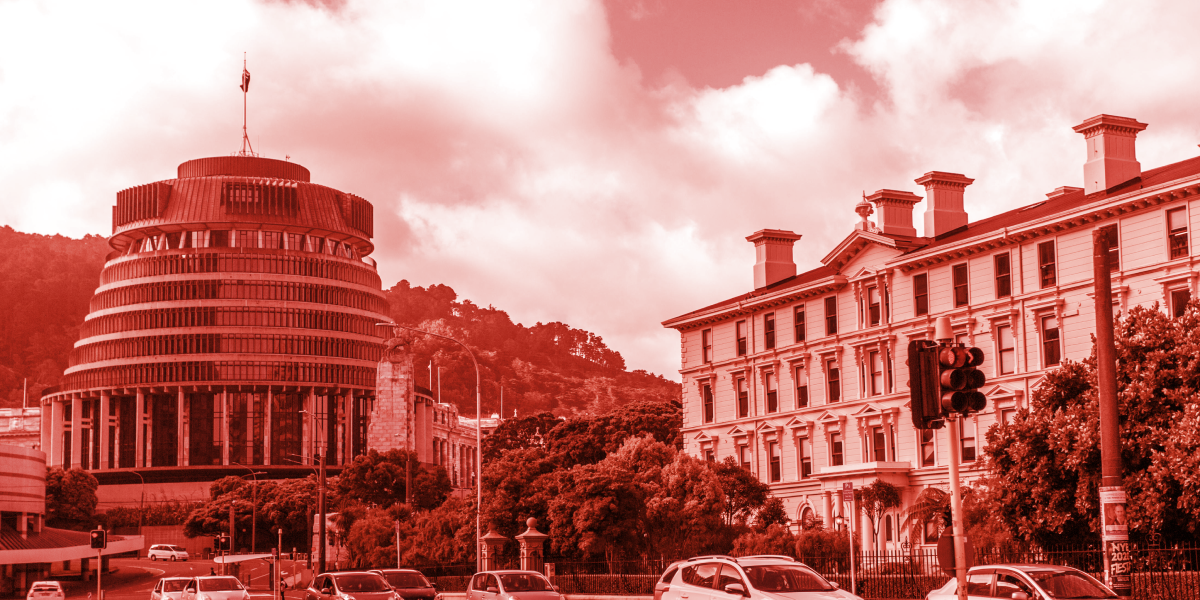
Politicians own hundreds of properties. But they’re not buying the suburbs about to boom.
Every year New Zealand MPs must disclose their assets through the Register of Pecuniary and Other Specified Interests of Members of Parliament.
The latest disclosure returns (covering interests declared up to early 2025) provide a look into where politicians hold property across the country.
For property watchers, that raises an interesting question.
If politicians know where infrastructure and policy are heading, do their property portfolios point to the next hot suburbs?
After analysing the latest disclosure data alongside property market trends, the answer is surprisingly clear.
Not really.
Parliament is heavily invested in property
Property remains New Zealand’s favourite investment and Parliament is no exception.
The latest disclosure analysis shows:
-
MPs collectively hold hundreds of residential and rural properties
-
the average MP owns around 2.2 properties
-
many hold property through family trusts or investment entities
In other words, a large portion of Parliament has direct exposure to the housing market.
That’s not necessarily unusual. Property ownership is common among older professionals and business leaders, which many MPs were before entering politics.
But it does make the disclosure register a fascinating dataset.
Where New Zealand politicians tend to own property
Looking across the latest disclosures, a few patterns emerge.
Auckland dominates
Unsurprisingly, a large share of MP property holdings are in Auckland.
Common locations include:
-
Epsom
-
Remuera
-
Mt Eden
-
Greenlane
-
central Auckland suburbs
These are established, high-value areas where many MPs already lived before entering Parliament.
Wellington apartments are common
Many MPs also hold small apartments or townhouses in Wellington.
These are often used as accommodation during the parliamentary term and then retained as rental properties.
Regional holdings often match electorates
Outside the main centres, MPs frequently own property in the regions they represent.
Examples include:
- farms and lifestyle blocks
- rental homes in provincial towns
- family homes in regional cities
This reflects personal ties rather than investment strategy.
But these aren’t the fastest growing suburbs
Here’s the interesting part.
When you compare these locations with recent property growth data, there’s very little correlation between where MPs own property and where prices are rising fastest.
Many MP holdings are in already mature markets, including:
These areas tend to grow steadily over time but are rarely the suburbs that suddenly outperform the market.
Recent price growth has often been stronger in:
-
affordable regional towns
-
outer suburban growth corridors
-
areas near new infrastructure projects
In other words, the next hot suburb usually starts somewhere cheaper and further out.
Why politicians’ property isn’t a good predictor
It might sound logical that politicians would invest where growth is coming.
After all, they’re closer to policy decisions, infrastructure spending and zoning changes.
But in reality, most property purchases happen for far more ordinary reasons:
Even when politicians know infrastructure is coming, those projects are usually public knowledge years in advance.
By the time a rail line or motorway is approved, developers and investors have already started positioning.
What actually predicts the next rising suburb
From a mortgage broker’s perspective, the real indicators of suburb growth are far more predictable.
The biggest drivers tend to be:
Infrastructure investment
Transport projects, rail upgrades and new motorways consistently lift nearby property demand.
Zoning and planning rules
When councils allow more housing or development, prices often move quickly.
Population growth
Migration and internal movement create pressure in certain areas before others.
Employment hubs
New commercial zones or business parks drive housing demand nearby.
These signals usually appear years before prices move significantly.
The real lesson from the disclosure data
The latest MP disclosure register gives a fascinating snapshot of where political leaders hold property.
But if you’re trying to spot the next suburb set to outperform, following politicians isn’t the strategy.
Instead, the better approach is to follow:
That’s where the next wave of growth almost always starts.
From a broker’s perspective, property growth rarely happens by accident. It follows infrastructure, planning and demand.
And those signals are usually visible well before the headlines.